
The silverleaf challenge
In early 2026, a landowner reached out about their persistent silverleaf nightshade (solanum elaeagnifolium) problem.
Located just outside of Wagga Wagga, their property has about 80 hectares of fields with steep hills that are hard to access, especially for spraying. While they had done a good job of managing the flats, the steep hills were a fast-growing seed bank. Silverleaf was becoming a real problem they could not access to address.
Drones let us exercise a high degree of control in our spraying, and hills are not an obstacle. We were able to reach the most hard-to-reach areas with our drones, saving them approximately 90% of chemical use.
Platform: DJI Mavic 3M (imaging) and DJI Agras T50 (application)
Software: Pix4D Fields for processing and imagery identification
Chemical: Fluroxypyr, 2,4-D Amine and paraffin oil mix
Precision: 1cm GSD (Ground Sampling Distance)
Variable Rate: Targeted spot-spraying via prescription map
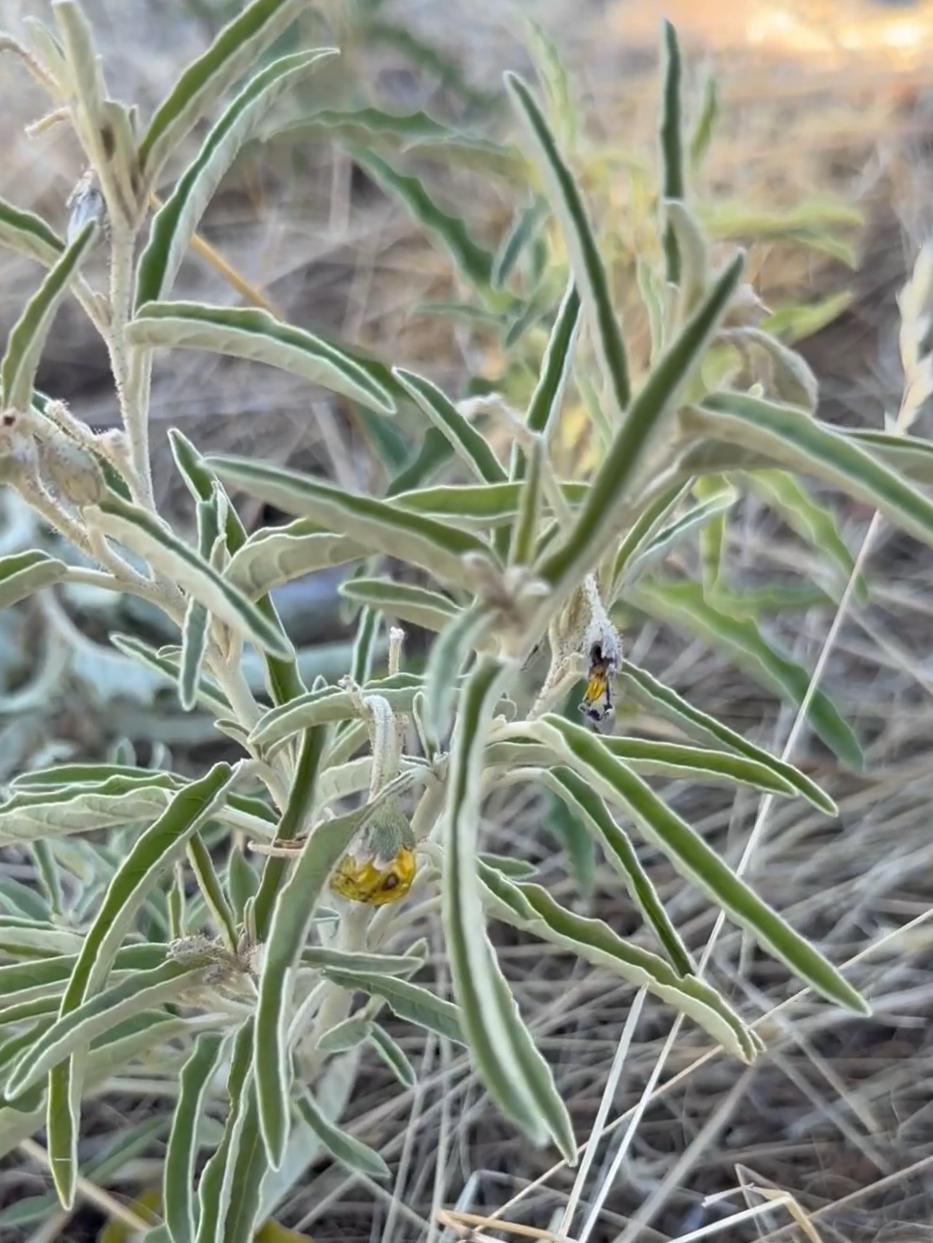
Silverleaf nightshade is typically a silvery-green colour, hard to distinguish from pastures and needs a high-precision approach.
Scoping
We started our workflow by visiting the property and taking high-resolution intelligence. This is important preparatory work and helps minimise time in the field, reduce chemical inputs and ensures a high level of control.
This initial process included:
· imaging work of the property, focusing on the silverleaf
· analysing the imagery
· creating a variable application map.
We considered the location of the property, which sits within a controlled airspace near the Wagga Wagga airport. Our RePL-qualified pilots actively deconflicted with planes, helicopters and air traffic control from the airport for every flight. We were constantly vigilant due to it being bushfire season. We ensured there was no impact on emergency services, especially as water-bombing helicopters transitioned over the farm at low altitudes.
We factor in the forecast to ensure it is not raining, storming, or beyond our heat threshold. It was expected to be too hot from around midday each day, so we planned an early start to make the best use of time. Arriving on-site before sunrise, we quickly filled our water stores from tanks while ensuring we didn’t contaminate clean stock water, and were ready to go.
This careful planning allows the spraying process to be efficient as well as safe for any local air traffic.
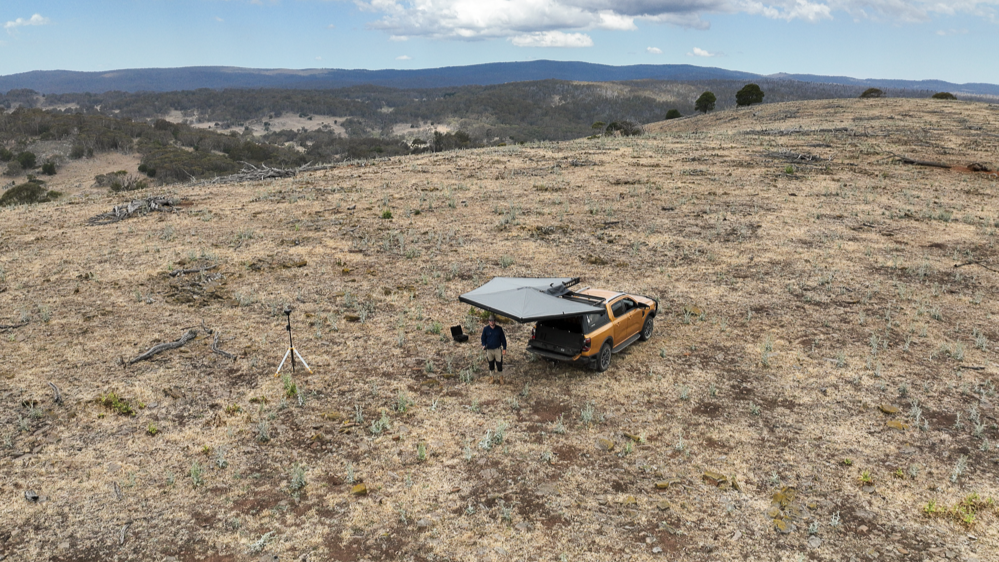
Aerial image of Techshift on location
Imaging and mapping
Our detailed overhead imagery can detect small features that we use to train a machine learning model. We could see that in the approximately 80 hectares of paddocks imaged, fewer than 6 hectares needed spraying. This included clumps of silverleaf as small as 0.5m2 that we could accurately depict and target.
Our detailed overhead imagery can detect small features that we use to train a machine learning model. We could see that in the approximately 80 hectares of paddocks imaged, fewer than 6 hectares needed spraying. This included clumps of silverleaf as small as 0.5m2 that we could accurately depict and target.
We built a variable spraying map with a buffer that marked up obstacles, waterways and other non-prescription areas. This process allows spraying drones to either avoid or turn off spraying pumps in these areas, while ensuring solid coverage. This allowed us to minimise knocking clovers and other beneficials in the pasture.
We then exported the targeted maps to a format that our spraying drones can interpret.
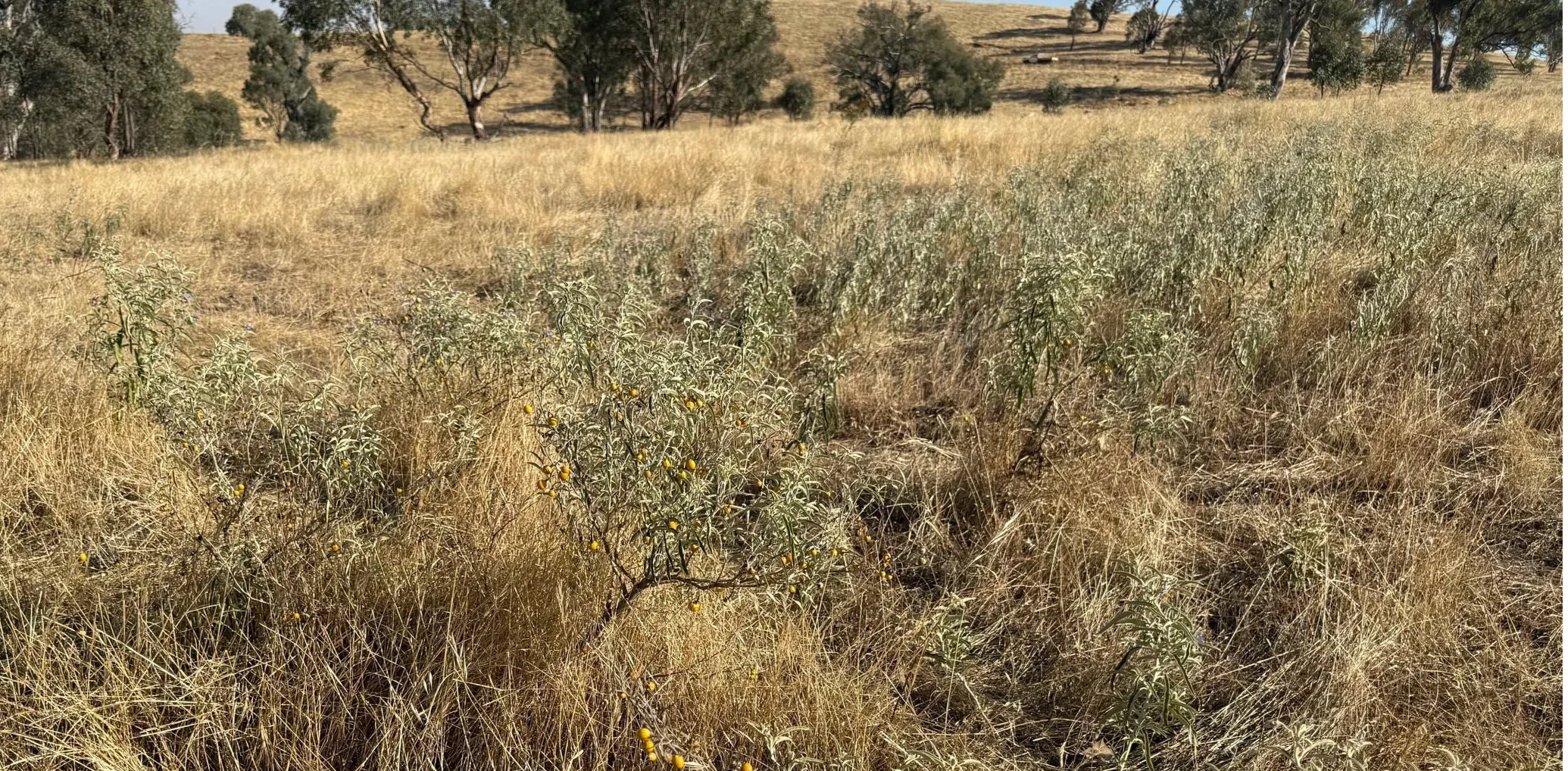
Image showing silverleaf nightshade growth
Spraying
It is imperative to keep chemical application rates as low as possible while maintaining efficacy. We consulted with an agronomist and used a Fluroxypyr, 2,4-D Amine and paraffin oil mix. This is a cost-effective solution that has good sticking power and control.
Our setup is designed for high-efficiency, remote operations and includes:
· 2000L of fresh water
· 3-phase generator
· a high-capacity batch mixer.
This setup allows us to remain entirely self-sufficient on-site and eliminates the ferrying time associated with smaller setups. We can mix and load the T50 in under a minute, and mixing a new batch takes just a few minutes due to our highly efficient plumbing setup.
The DJI T50 does a good job of maintaining altitude. This meant that the drone could stay between 2.5–3 metres off the ground despite the block having sections of 20% gradients. Because of this, we could ensure a consistent swath and reliable spraying pattern.
We can also operate the drone up to a kilometre from the trailer, with about 75% of this spraying conducted from one location. Combined with our targeted spraying map, this approach saves significant time and cost.
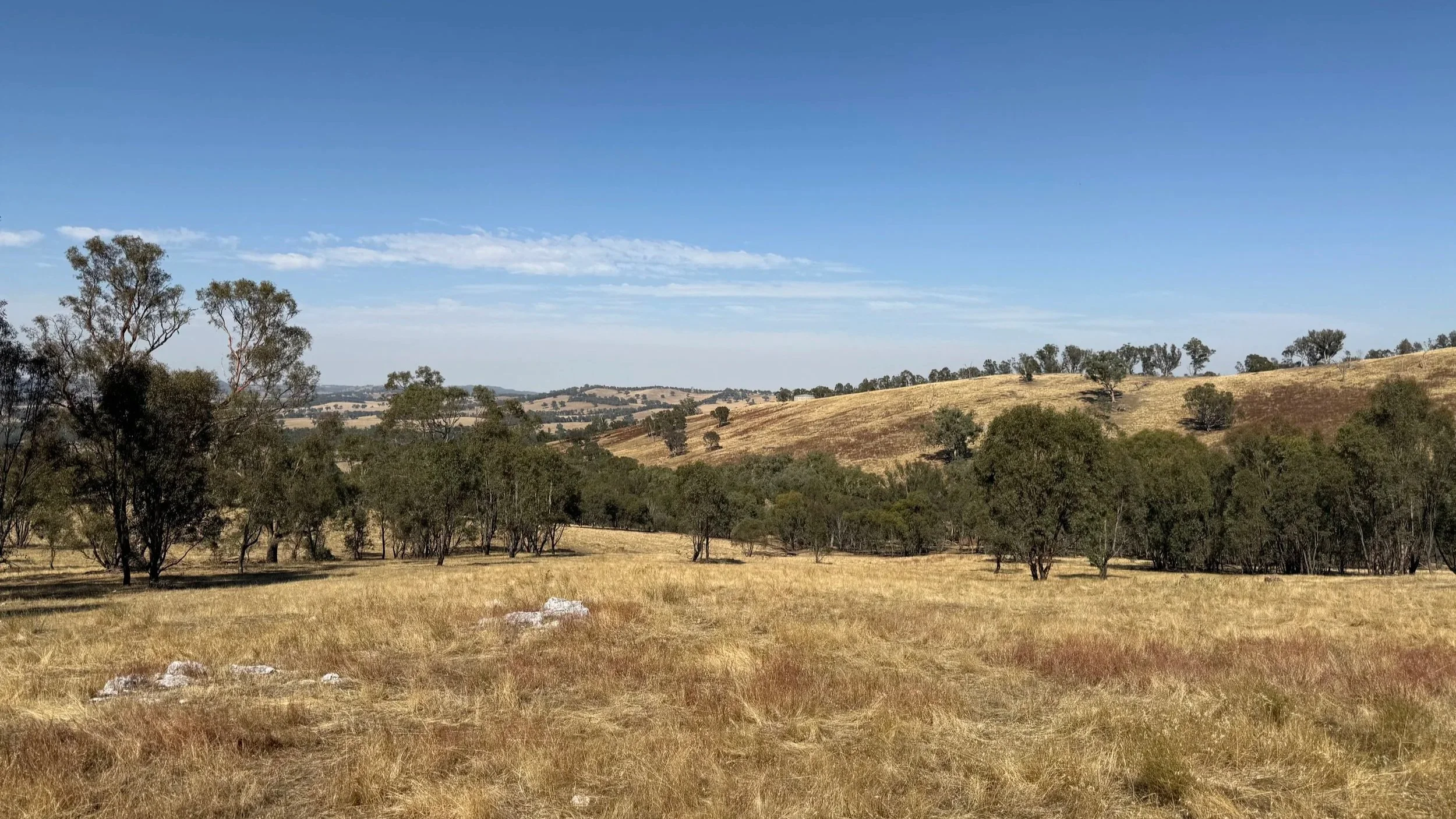
Image showing property where silverleaf nightshade was treated
Results
We were able to turn a potential multi-day, high-risk manual labour task into a precision operation.
We used imagery to accurately identify the silverleaf and spray it with precision in the hard-to-reach areas. This combined our high-resolution intelligence with heavy-lift application and saved the landowner approximately 40% in labour time and 90% on chemical usage.
It also gave them peace of mind that their most difficult country was finally under control.
Get in touch
Do you have inaccessible country that needs a precision approach? We specialise in difficult access, high precision operations in the southern NSW, northern Victoria and ACT regions.